
Start with the reason for treatment
Before focusing on what an expander will feel like, make sure you understand why it is being recommended. Ask the clinician to describe the finding the plan addresses and the intended result in plain language. You should be able to explain the purpose back in your own words.
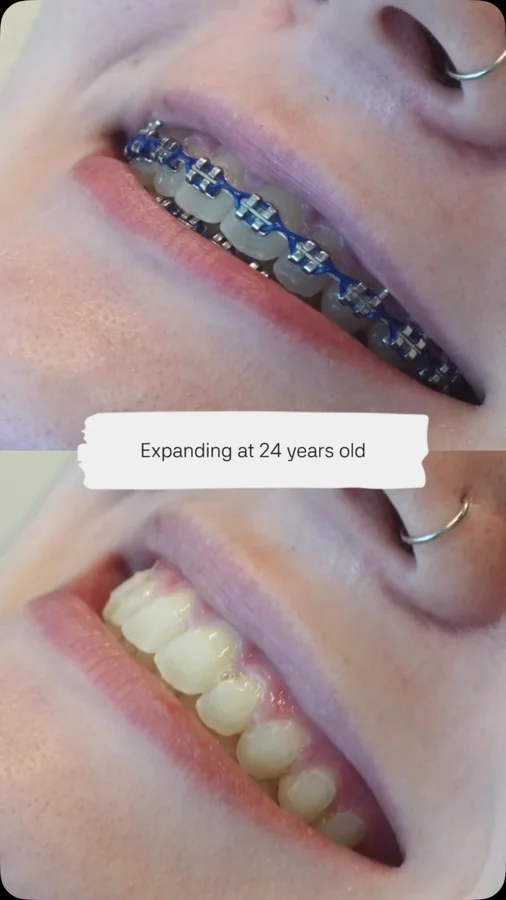
A patient story can make a new experience feel more familiar, but it is not a substitute for that explanation. Cassidy's caption does not provide the clinical details needed to compare treatment plans. Use the post to identify your questions, then ask which parts of the discussion are relevant to your own situation.
Prepare questions about everyday routines
Bring the practical questions that will affect your day: how the appliance fits into meals, cleaning, school or work, and other activities. Ask the team to demonstrate any care steps that apply to the device being provided. If someone else will help, include them in that conversation.
Do not assume that an instruction from another patient's post applies to your appliance. Ask whether there are adjustments to make at home, who should make them, and how the team wants questions communicated. Written instructions give you a reference after the appointment, when new details are explained.
Clarify the sequence and checkpoints
Ask the team to outline the planned stages and distinguish an estimate from a fixed commitment. What is the next checkpoint? What will be reviewed there? Is further orthodontic treatment expected afterward? Understanding the sequence can make an unfamiliar plan easier to follow.
Also ask what progress means in this case. A visible change may be only part of the picture. The clinician should explain which findings will be checked and how the next decision will be made. If the plan changes, you can then ask which new information led to that change rather than comparing your timeline with someone else's.
Keep your goals in the conversation
Patients may arrive with different priorities: the bite, dental space, appearance, or a concern about breathing and sleep. Tell the team which outcomes matter to you and ask which ones the proposed plan is designed to address. A complete conversation includes goals that may need separate assessment.
If breathing or sleep is part of your concern, complete the airway evaluation and bring those observations to the consultation. Ask how that information fits with the orthodontic findings. Begin treatment with a clear purpose, practical instructions, and an agreed way to review progress.
Define the indication before discussing appliance routines
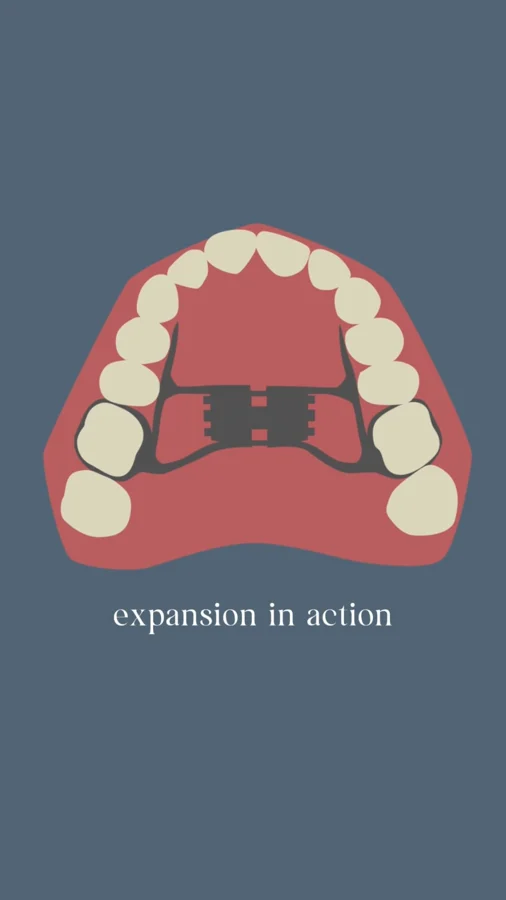
An expander is a means of delivering a planned correction, not a diagnosis. Before placement, the record should identify the transverse discrepancy, its skeletal or dental components, the relevant dentition stage, and the expected relationship between the upper and lower arches after treatment. A patient story can illustrate the experience of wearing an appliance, but it cannot establish another patient’s candidacy.
Practical questions become more useful when tied to that indication. Which measurements will show that the planned correction has been achieved? Is the first phase intended to correct a crossbite, coordinate arch widths, improve eruption space, or address several defined goals? What further orthodontic treatment may still be needed? These questions clarify why an appliance is being used without assuming that the same sequence is appropriate for every child.
Distinguish activation, stabilization, and longitudinal review
The active phase and the stabilization phase answer different clinical needs. Activation changes the appliance’s transverse dimension; the subsequent plan maintains and evaluates the achieved correction while treatment proceeds. The patient’s own clinician should specify adjustments, wear instructions, hygiene, and review intervals. A social post is not a safe source for copying an activation schedule because appliance design and the treatment objective may differ.
Follow-up should also identify what would require contacting the treating office, such as appliance breakage or a concern about tissue irritation. If breathing or sleep is a treatment concern, establish a separate follow-up pathway for those outcomes. Comfortable appliance wear and a well-aligned arch do not quantify nocturnal respiratory function. This distinction lets the patient experience remain valuable while keeping clinical conclusions tied to documented examination and the appropriate medical assessment.
Bring the conversation to your visit.
- What specific finding is this expander intended to address?
- Which daily-care instructions apply to the exact appliance I will receive?
- What will be checked at follow-up, and how will I know the plan is progressing?
Supporting studies & resources
These resources add clinical context to the original post. Each publication should be read with its study population, methods, and outcomes in mind.
- Management of the Developing Dentition and Occlusion in Pediatric Dentistry American Academy of Pediatric Dentistry · 2024 · Clinical best practice
- What Are the Benefits of Early Orthodontic Treatment? American Association of Orthodontists · 2026 · Patient education
- Policy on Obstructive Sleep Apnea (OSA) American Academy of Pediatric Dentistry · 2026 · Professional policy