
Why a child's plan differs from an adult's
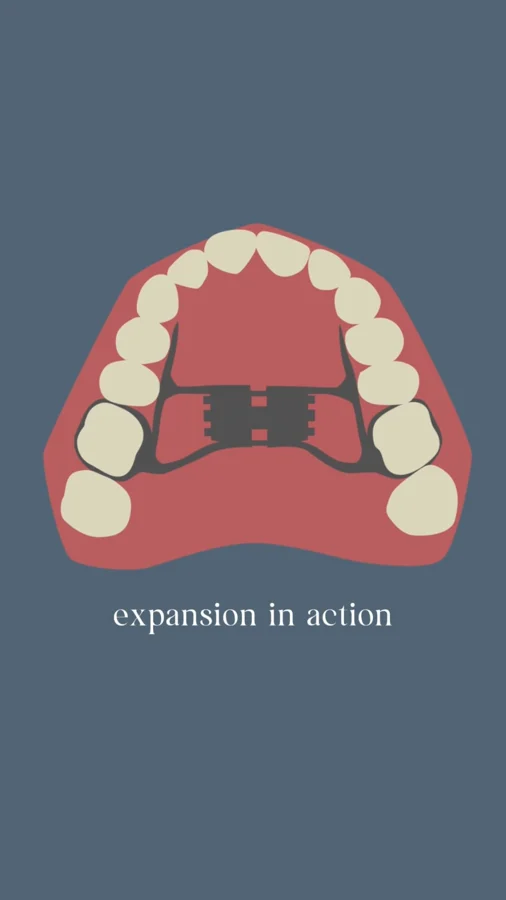
Expansion is planned within the patient's stage of dental and skeletal development. The same word can therefore describe treatment approaches that differ in how forces are applied and whether surgery is involved. A useful consultation starts with the width discrepancy and the patient's anatomy before choosing a device.
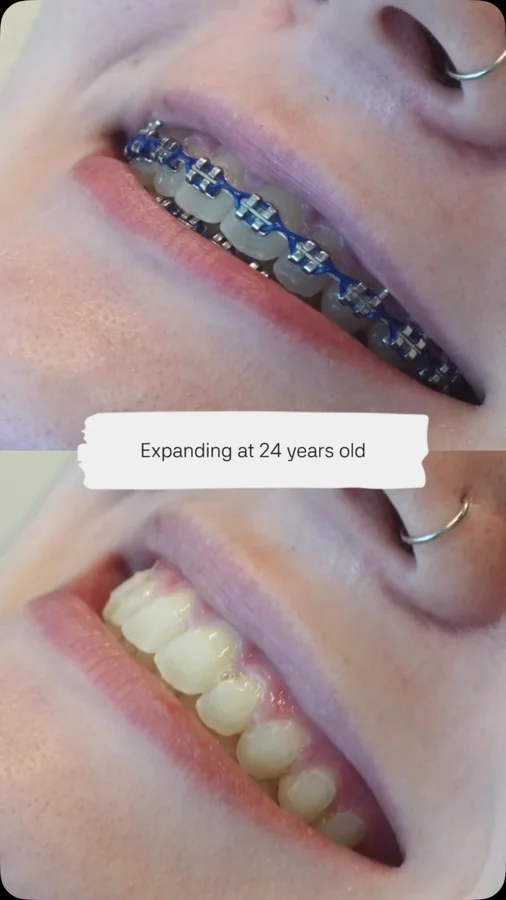
Early assessment does not automatically mean early treatment. For a child, ask what should be addressed now and what can be observed. For an adolescent or adult, ask how the clinician has evaluated development and why a particular method is expected to achieve the intended correction.
Understand what the names describe
MARPE stands for mini-implant assisted rapid palatal expansion. It uses skeletal anchorage as part of the expansion approach. SARPE refers to surgically assisted rapid palatal expansion. DOME is a surgical expansion protocol studied in selected adults with a narrow maxilla and nasal floor.
These labels do not describe identical procedures, and they should not be used as interchangeable promises of an airway result. Ask whether the proposed plan includes surgery, how the expander is supported, and what other orthodontic treatment is expected. The explanation should be specific enough that you know which approach is actually being offered.
Use maturity evidence without oversimplifying it
Angelieri and colleagues examined adult scans and found that chronological age did not reliably identify suture maturation stage within their sample. The finding illustrates individual variation. It does not establish that maturity is irrelevant or that one imaging feature can predict every treatment outcome.
Similarly, a positive MARPE study does not show that all adults can be treated without surgery. A DOME cohort does not show that all adults require it. Each study involves a particular population and method. Ask how closely that evidence matches your findings and what information would change the recommendation.
Choose a goal before choosing a technique
The most useful question is not simply, “Which expander is best?” Ask what needs correction and how the team will determine whether it has been corrected. Dental width, the bite, nasal symptoms, and sleep-related outcomes are separate goals that may require different measurements.
At the airway evaluation, explain whether you are seeking help with a dental concern, breathing symptoms, or both. Ask about the expected sequence of care, relevant alternatives, and follow-up. A thoughtful recommendation connects the technique to your particular findings and describes the limits of what it is expected to accomplish.
MARPE, SARPE, and DOME describe different treatment strategies
Mini-implant assisted rapid palatal expansion uses skeletal anchorage to transmit expansion forces. Surgically assisted rapid palatal expansion combines an expansion appliance with surgical reduction of skeletal resistance. Distraction osteogenesis maxillary expansion describes a particular surgically assisted approach investigated in selected adults with a narrow maxilla and nasal floor. These terms should not be used as interchangeable names for any appliance that widens a smile.
Method selection requires a diagnosis of the transverse discrepancy and consideration of skeletal maturity, dentoalveolar compensation, periodontal boundaries, medical history, and the goals of treatment. A specific age birthday is not a complete decision algorithm. The relevant question is whether the proposed intervention can achieve the required skeletal correction with an acceptable burden and risk profile for the individual patient.
Compare procedures using matched clinical endpoints
A comparison is meaningful only when the same outcome is being considered. Technical expansion success, correction of a crossbite, change in nasal symptoms, and change in the apnea–hypopnea index are different endpoints. Published studies may also use different patient populations, appliance designs, exclusion criteria, and follow-up schedules. Their percentages cannot be placed side by side as if they describe identical patients receiving interchangeable care.
During consultation, ask which procedure is being proposed, what anatomic finding supports that choice, and what alternative would be considered if the intended response is not achieved. The consent discussion should distinguish the expansion phase from orthodontic alignment, retention, and any surgical follow-up. These explanations are useful even when a particular technique is discussed only as an educational option; its inclusion in this resource does not establish that it is appropriate or available for every patient.
Bring the conversation to your visit.
- What findings support this expansion method at my current stage of development?
- Does the plan involve skeletal anchorage, surgery, or both?
- Which outcomes will be measured to judge whether treatment achieved its goals?
Supporting studies & resources
These resources add clinical context to the original post. Each publication should be read with its study population, methods, and outcomes in mind.
- Cone beam computed tomography evaluation of midpalatal suture maturation in adults Angelieri et al. · International Journal of Oral and Maxillofacial Surgery · 2017 · Cross-sectional imaging study
- Mini-implant assisted rapid palatal expansion (MARPE) effects on adult obstructive sleep apnea (OSA) and quality of life: a multi-center prospective controlled trial Brunetto et al. · Progress in Orthodontics · 2022 · Prospective nonrandomized controlled trial
- Distraction Osteogenesis Maxillary Expansion (DOME) for adult obstructive sleep apnea patients with narrow maxilla and nasal floor Yoon et al. · Sleep Medicine · 2020 · Retrospective cohort study
- What Are the Benefits of Early Orthodontic Treatment? American Association of Orthodontists · 2026 · Patient education