Separate the three ideas in the visual
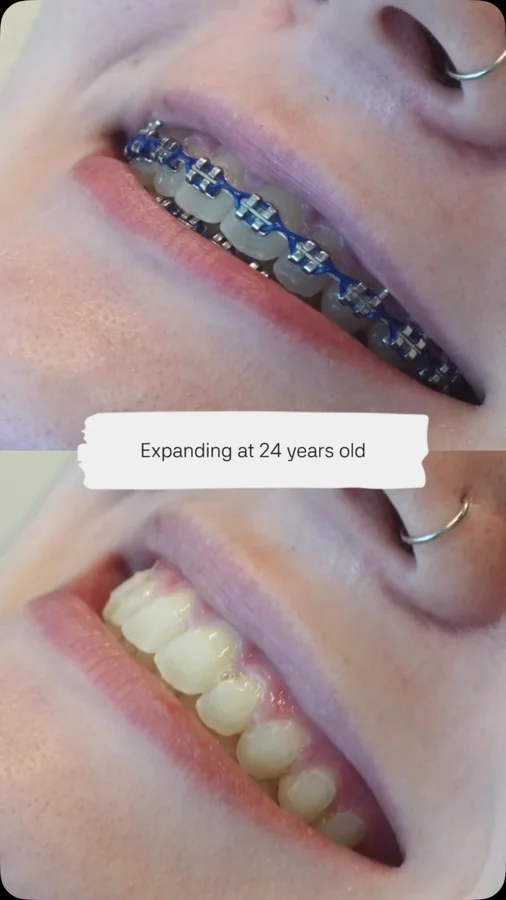
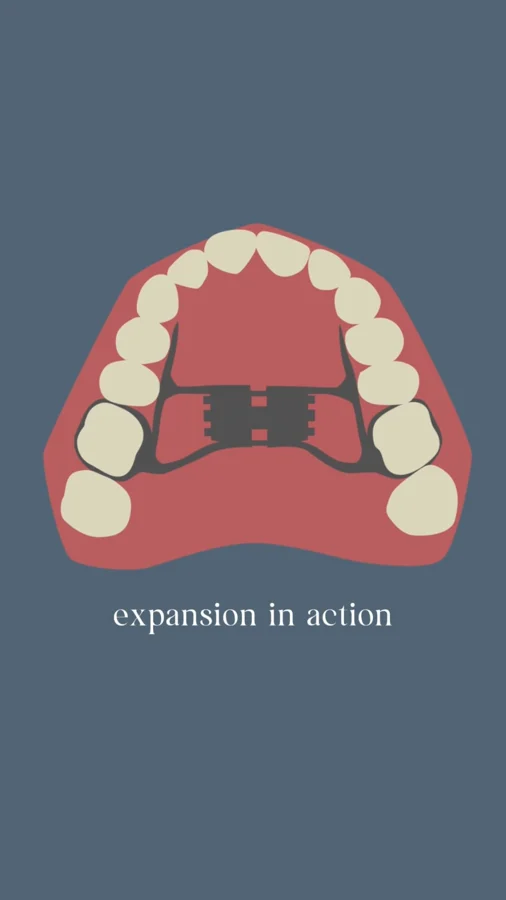
Palatal expansion addresses width across the upper jaw. Tooth alignment concerns where teeth sit within the available space. Jaw relationships describe how the upper and lower jaws fit together. An animation can make these ideas easier to see, but combining them in one visual should not make them seem interchangeable.
For a patient, the useful question is which finding the clinician is trying to change. Is there an upper-jaw width discrepancy, a dental alignment concern, a jaw relationship that affects the bite, or more than one issue? Each answer should be supported by the examination and the records used for planning.
Connect anatomy with the right kind of evidence
The palate and nasal structures are anatomically related, which explains why researchers study breathing alongside expansion. Studies have reported changes in nasal dimensions, resistance, and airflow after treatment. These outcomes help investigate how an intervention affects the system.
They still answer different questions. A larger measured space describes anatomy. Lower resistance describes a breathing measurement under specified conditions. Neither result alone confirms that a person's sleep apnea has resolved. When sleep is a treatment goal, ask how sleep-related outcomes will be assessed before and after care.
Put growth and function into the plan
The meaning of “jaw repositioning” depends on the patient's development and the treatment being discussed. Growth-directed orthodontic care in a child is different from moving adult jaw bones surgically. It is also different from an appliance that holds the lower jaw forward during use.
The AAPD's guidance on developing dentition supports attention to the child's findings and stage of development. Ask the team to explain the proposed approach in ordinary language: what will change, what depends on growth, and what the appliance or procedure cannot be expected to accomplish.
Turn an appealing visual into a useful consultation
Bring the animation as a conversation starter. Ask the clinician to point out which part applies to your situation and which parts are simply general education. A personalized explanation should connect the diagnosis, proposed treatment, alternatives, and follow-up without relying on the animation as proof.
The airway evaluation can help organize the breathing and sleep concerns you want to raise. Keep those concerns alongside your bite and dental goals. A coherent plan explains how the different goals fit together and how the team will recognize meaningful improvement in each one.
Interpreting transverse expansion in three dimensions
The animation simplifies a three-dimensional orthopedic intervention involving the midpalatal region and the dentoalveolar supporting structures. In clinical assessment, transverse maxillary deficiency is distinguished from dental crowding alone. Posterior tooth inclination, arch coordination, palatal configuration, and the relationship of the maxilla to the mandible help determine whether the problem is skeletal, dentoalveolar, or mixed. A wider distance between molar crowns does not, by itself, quantify basal skeletal expansion.
The clinically relevant question is therefore not merely whether an appliance creates more space. It is where that space is created, which structures move, and whether the intended correction remains within the periodontal and occlusal constraints of the patient. Records before and after treatment should use consistent landmarks. They should also separate active expansion from the subsequent retention and comprehensive orthodontic phases.
Connecting the animation to a measurable treatment objective
A useful treatment objective identifies a specific deficit: for example, transverse arch incompatibility or a posterior crossbite. Nasal dimensions, nasal airflow, and sleep-disordered breathing are additional outcome domains, not synonyms for that orthopedic correction. Research can establish that selected measurements changed without proving that every clinically relevant airway problem resolved.
For a patient with documented sleep apnea, the animation should initiate a discussion about multidisciplinary assessment rather than imply a universal sequence of care. The ATS guideline considers orthodontic or dentofacial orthopedic treatment for selected children with persistent OSA and relevant craniofacial findings; its recommendation is conditional. In practice, this means defining the dental indication, the medical diagnosis, and the follow-up measure before treatment. A successful occlusal result and an unresolved sleep concern can coexist and deserve separate responses.
Bring the conversation to your visit.
- Which structural finding in this animation applies to me or my child?
- What outcome will be measured beyond the appearance of the teeth?
- How will the team check whether breathing or sleep has changed?
Supporting studies & resources
These resources add clinical context to the original post. Each publication should be read with its study population, methods, and outcomes in mind.
- Evaluation of the effects of different rapid maxillary expansion appliances on airway by acoustic rhinometry: A randomized clinical trial Gokce et al. · International Journal of Pediatric Otorhinolaryngology · 2022 · Randomized trial
- The role of pediatric maxillary expansion on nasal breathing. A systematic review and metanalysis. Calvo-Henriquez et al. · International Journal of Pediatric Otorhinolaryngology · 2020 · Systematic review and meta-analysis
- Management of the Developing Dentition and Occlusion in Pediatric Dentistry American Academy of Pediatric Dentistry · 2024 · Clinical best practice
- Management of Persistent, Post-adenotonsillectomy Obstructive Sleep Apnea in Children: An Official American Thoracic Society Clinical Practice Guideline American Thoracic Society · American Journal of Respiratory and Critical Care Medicine · 2024 · Clinical guideline
- Polygraphic evaluation of the effects of different rapid maxillary expansion appliances on sleep quality: A randomized clinical trial Gokce et al. · Sleep and Breathing · 2023 · Randomized trial