Read a case example with a clear question
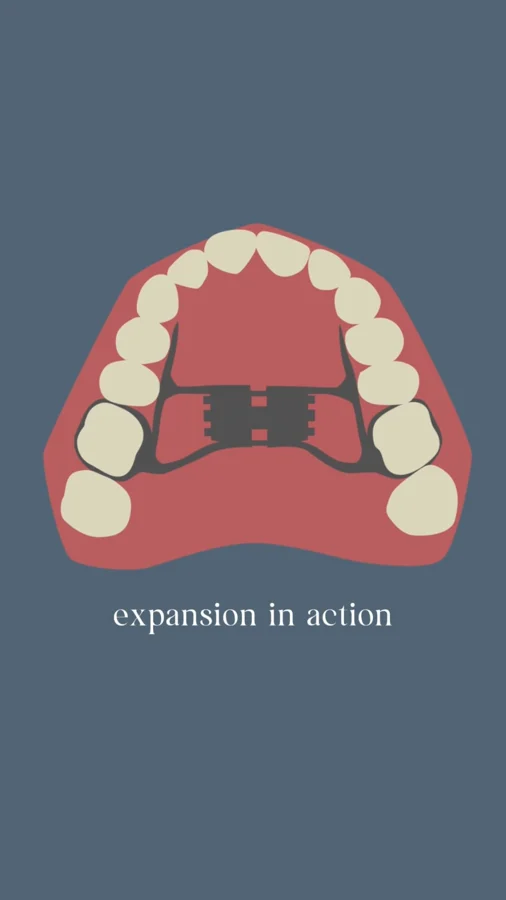
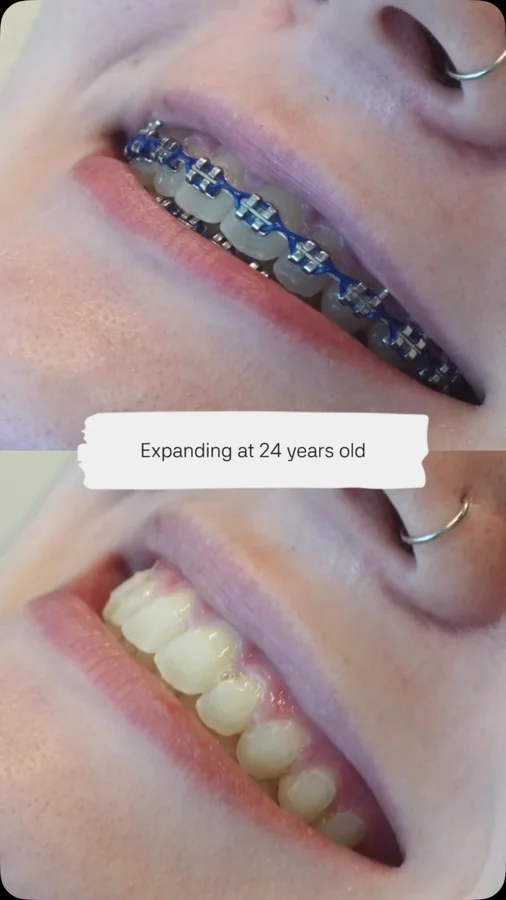
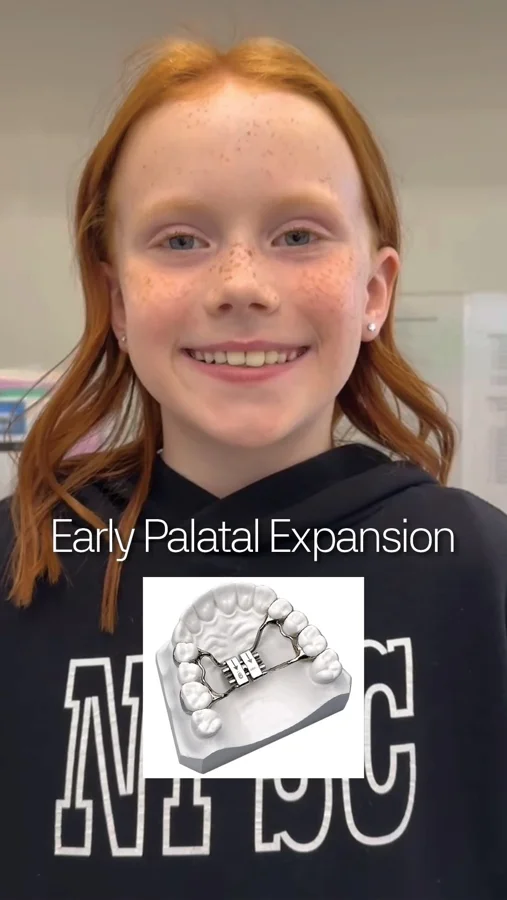
The starting observation in this post is a narrow upper arch. Its caption describes using a palatal expander to create more appropriate space. That makes the case useful for discussing the transverse dimension of the upper jaw: its width, how it relates to the lower arch, and what the treating clinician intended to change.
A complete clinical explanation would also include the patient’s developmental stage, examination findings, records, and treatment goals. Those details matter when considering whether another child has a similar problem. A resemblance between two photographs is not enough to choose the same appliance.
Understand why the nasal relationship matters
The palate forms the roof of the mouth and is closely related to the floor of the nasal cavity. This anatomical connection helps explain why researchers investigate nasal changes after maxillary expansion. It also explains why an airway-focused assessment can ask about both bite development and nasal breathing.
Research has examined nasal dimensions and resistance, not just the appearance of the dental arch. The Gökçe nasal-dimensions trial provides one example of measuring structural changes across expander designs. The appropriate interpretation remains specific to the patients, appliance designs, and outcomes studied.
Keep the outcome categories separate
The caption does not report a sleep study or a numerical breathing outcome for this child. The educational article therefore cannot convert the visible dental example into evidence that sleep apnea resolved. If sleep symptoms were part of an individual treatment plan, the team would need a suitable way to evaluate them over time.
A useful discussion names the dental goal first and then explains any additional airway-related goals. Ask what evidence supports each goal, what other evaluation is needed, and whether progress in one area changes the plan in another. This keeps the treatment rationale understandable.
Build a follow-up plan, not just an appliance plan
Before treatment begins, ask how the team will determine that the intended expansion has been achieved. Also ask about the transition from active treatment to maintaining the result, and how future growth or later orthodontic needs will be reviewed. The appliance is one part of a longer care process.
Families can bring earlier dental records and observations about sleep or breathing to an evaluation. Coordinating these details helps the clinicians explain which findings are related, which may need separate attention, and what a realistic sequence of care would look like for that child.
Distinguish arch appearance from a transverse maxillary diagnosis
A constricted-looking arch may prompt assessment, but the diagnosis should consider the relationship between both arches, posterior tooth inclinations, palatal morphology, and whether intercuspation produces a functional mandibular shift or posterior crossbite. A photograph alone does not quantify the skeletal component of a discrepancy. The clinician needs to determine which structures require correction and whether the proposed intervention addresses that problem.
In the published expansion literature, dental and skeletal measurements are treated as specific outcomes. The same discipline is useful when discussing an individual case: identify the landmarks, the measurement interval, and the treatment phase. A visible increase in arch width is more interpretable when the record explains whether it reflects skeletal expansion, dentoalveolar change, or both. That distinction affects the treatment rationale and the subsequent plan for stabilization and occlusal coordination.
What would make this case informative about breathing?
To support a respiratory interpretation, an individual case needs respiratory information in addition to dental images. Relevant documentation might include the original complaint, a medical diagnosis when present, the chosen measurement, and the timing of reassessment. The case should also identify whether nasal or sleep treatment occurred alongside the orthodontic intervention.
Without those details, the appropriate conclusion concerns the dental changes actually shown. Research on nasal dimensions provides a plausible rationale for studying expansion in selected patients, while the sleep-outcome trial demonstrates why a respiratory benefit cannot simply be inferred from a corrected arch. This distinction strengthens the educational value of the case: readers can understand the anatomical intervention and the separate evidence required to evaluate an airway claim. It also supports more precise goals at consultation, including what the treating team will measure and who will evaluate persistent symptoms.
Bring the conversation to your visit.
- What confirms that this is a transverse jaw-width problem?
- How will you decide that the expansion goal has been reached?
- Which breathing concerns need separate assessment and follow-up?
Supporting studies & resources
These resources add clinical context to the original post. Each publication should be read with its study population, methods, and outcomes in mind.
- Evaluation of the effects of different rapid maxillary expansion appliances on airway by acoustic rhinometry: A randomized clinical trial Gokce et al. · International Journal of Pediatric Otorhinolaryngology · 2022 · Randomized trial
- Management of the Developing Dentition and Occlusion in Pediatric Dentistry American Academy of Pediatric Dentistry · 2024 · Clinical best practice
- Polygraphic evaluation of the effects of different rapid maxillary expansion appliances on sleep quality: A randomized clinical trial Gokce et al. · Sleep and Breathing · 2023 · Randomized trial