One moment does not define a breathing pattern
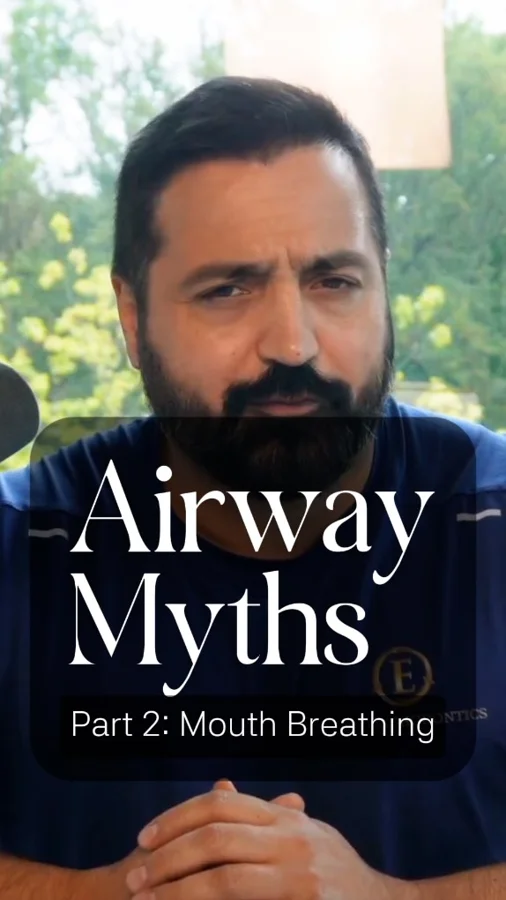
The post challenges a common dismissal: that mouth breathing in children is always normal and can be ignored. The useful distinction is persistence. Seeing a child with an open mouth in one photograph does not establish how that child usually breathes or explain why. A recurring pattern during ordinary rest deserves a more thoughtful conversation.
Parents can begin by describing the circumstances. Is it noticeable when the child is well, when tired, or mainly during an illness? Does the child describe trouble using the nose? These observations help avoid two extremes: overlooking a persistent concern or treating every occasional open-mouth moment as a medical problem.
Ask what may be contributing
Oral posture and nasal breathing can be affected by more than one factor. ASHA's guidance identifies airway obstruction and oral functional patterns as issues that may need assessment together. The practical implication is to investigate the reason for the pattern before asking a child to change it through effort alone.
When discussing care, ask which part of the concern belongs with the dental team and whether another professional should evaluate a possible contributor. The explanation should be specific to your child. A social-media example, a facial feature, or a visible tongue attachment is not enough by itself to choose a procedure.
Keep the sleep history in view
Mouth breathing also appears among the symptoms considered in pediatric sleep assessment. If it accompanies frequent snoring or other sleep concerns, describe those observations together. A dental team can help identify reasons for further evaluation, while diagnosis of a sleep disorder requires the appropriate medical pathway.
This does not mean that every child who mouth breathes has sleep apnea. It means a clinician should hear the complete pattern before drawing conclusions. A family seeking help for oral posture may still have a separate sleep question, and a plan should explain who will address it and how the findings will be shared.
Use the observation to start a useful visit
Write down a few typical examples and any questions the child has expressed. Bring them to a pediatric or dental visit and ask what would distinguish a temporary issue from a concern needing further assessment. Request a next step that is clear enough to follow, whether it is observation, a focused examination, or a referral.
The online airway evaluation offers a way to organize these concerns before a conversation. Its value is in making the history easier to discuss. The decision about monitoring, therapy, dental treatment, or medical care should follow the individual findings, with a clear explanation of what each recommendation is meant to address.
Distinguish intermittent oral breathing from a persistent clinical pattern
Mouth breathing during a temporary respiratory illness is not the same clinical presentation as a persistent open-mouth posture with chronic nasal symptoms. The history should describe when the pattern occurs, whether it is present during wakefulness or sleep, and whether it changes with congestion or other symptoms. Frequency and context are more useful than a single photograph of an open mouth.
A persistent pattern can justify evaluation of nasal patency and oral function, but it does not independently diagnose OSA. Some patients may have a functional or nasal concern without a sleep disorder; others may have coexisting conditions. The clinician’s task is to identify which findings are present and how they relate. Labeling the behavior as normal or abnormal without that assessment can oversimplify the clinical question and obscure the appropriate referral.
What should be documented before proposing a corrective intervention?
The record should include the symptom history, relevant medical diagnoses, dental and occlusal findings, and the particular functional limitation being considered. If the concern involves sleep, observations such as snoring or breathing pauses should be assessed separately from daytime oral posture. If nasal breathing is difficult, evaluating the possible obstruction comes before assuming that posture retraining will be sufficient.
The treatment objective should then be stated in observable terms. Examples include addressing a diagnosed transverse discrepancy or improving a documented oral-function difficulty within the appropriate care pathway. “Normalize the airway” is too nonspecific to serve as a stand-alone endpoint. Follow-up should ask whether the original complaint and the relevant measurements changed, whether the improvement persists, and whether symptoms warrant further medical review. This produces a more clinically useful conversation than treating mouth breathing as a diagnosis with one universal remedy.
Bring the conversation to your visit.
- Does this look like an occasional behavior or a persistent breathing concern?
- Which potential contributors should be assessed before treatment is chosen?
- Do the sleep observations change the recommended next step?
Supporting studies & resources
These resources add clinical context to the original post. Each publication should be read with its study population, methods, and outcomes in mind.
- Orofacial Myofunctional Disorders American Speech-Language-Hearing Association · Undated · Professional guidance
- Policy on Obstructive Sleep Apnea (OSA) American Academy of Pediatric Dentistry · 2026 · Professional policy
- Sleep Apnea in Children National Heart, Lung, and Blood Institute · 2025 · Patient education