Replace a vague wait with a defined plan
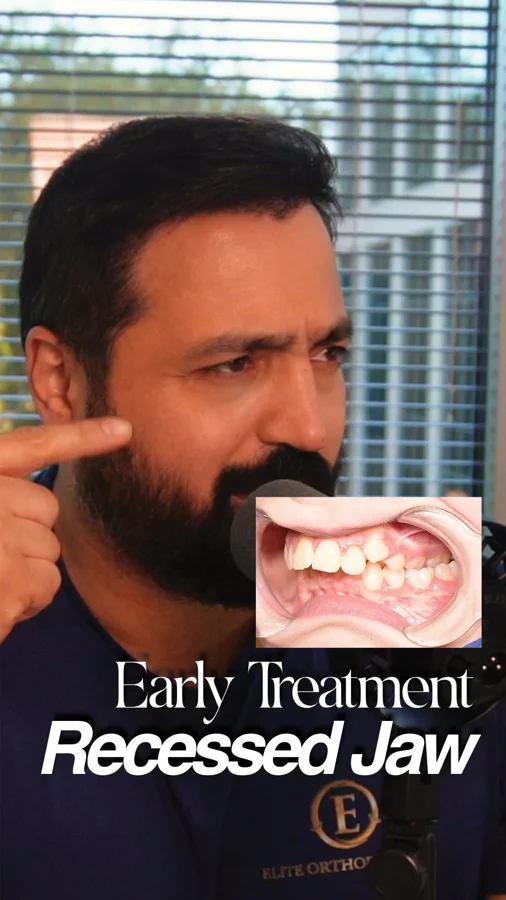
The post challenges the idea that a growing child’s concerns should be dismissed without a closer look. A productive response is to make the decision specific. What finding is being observed? What is expected to change with growth? When will the clinician reassess it? What would lead to a different recommendation?
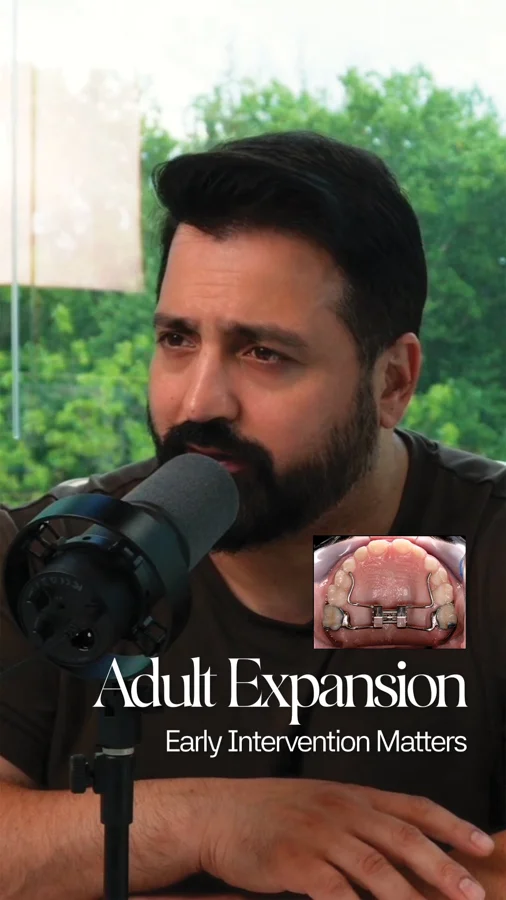
Monitoring can be an active clinical choice. It becomes easier for a family to understand when its purpose and follow-up are explicit. Treatment can also be appropriate before all permanent teeth have erupted, but that decision should follow an assessment rather than an assumption that every developing bite requires immediate intervention.
Separate observations from diagnoses
Parents may notice restless sleep or a child who struggles to concentrate. A dentist may notice tooth wear, crowding, or a bite that shifts during closure. These observations deserve to be recorded accurately. They do not all point to a single cause, and their presence does not establish obstructive sleep apnea.
The assessment should distinguish a dental-development concern from a suspected medical sleep problem. Ask whether the findings call for orthodontic records, pediatric or ENT review, or a sleep evaluation. A coordinated plan can include more than one pathway without assuming one specialty has every answer.
Use growth information to inform timing
The American Association of Orthodontists recommends a first orthodontic check by age seven. This is an opportunity to identify developing issues and discuss timing; it is not a recommendation that all seven-year-olds receive braces or expansion. The AAPD’s developing-dentition guidance likewise frames care around diagnosis, development, and individualized objectives.
For the family, the practical question is whether there is a defined problem that would benefit from attention during growth. Ask the clinician to describe that problem in ordinary language and explain the likely tradeoffs of treating now, monitoring, or seeking another assessment.
Keep the family’s observations useful
Write down the pattern that prompted concern, how long it has been present, and whether it is changing. Bring relevant records instead of relying on memory alone. If the plan is observation, request a clear review date and a way to report new or worsening concerns before that appointment.
The airway evaluation offers a starting structure for this conversation. Its purpose is to help communicate what you have noticed. A complete visit then connects that history with examination findings and, when needed, input from medical or therapy professionals.
Monitoring should be an explicit diagnostic strategy
Observation is clinically meaningful when it specifies what is being observed and why intervention is not currently indicated. For a developing occlusion, the plan may track eruption, transverse relationships, crowding, or growth-related changes. The record should identify the baseline finding and the change that would lead the clinician to reconsider timing or treatment.
This approach differs from an indefinite instruction to wait. It gives the family an understandable rationale and lets subsequent visits compare the same variables. It also avoids assuming that every early finding requires an appliance. Some conditions are best addressed during a specific developmental stage; others can be followed until the clinical picture is clearer. The appropriate decision rests on a documented problem and the expected benefit of acting at that time.
Separate orthodontic monitoring from evaluation of ongoing respiratory symptoms
A decision to monitor the dentition does not mean that persistent snoring or other respiratory concerns should be ignored. Those symptoms may warrant medical assessment on a different timeline from orthodontic care. Conversely, a sleep concern does not automatically justify early expansion when there is no established transverse or other orthodontic indication.
The coordinated plan should name the next step for each concern: which clinician will assess it, what information is needed, and which findings would prompt follow-up. This makes the distinction between observation and treatment more concrete than a general preference for “early intervention.” The same logic applies when treatment has already begun: progress should be compared with the original objective, and new symptoms should be assessed rather than assumed to be part of the original diagnosis. Clinical timing is a reasoned decision about specific findings, not a universal age-based rule.
Bring the conversation to your visit.
- What exactly are we monitoring, and why?
- Which finding would change the timing of treatment?
- When should we return, and who should assess the sleep concerns?
Supporting studies & resources
These resources add clinical context to the original post. Each publication should be read with its study population, methods, and outcomes in mind.
- What Are the Benefits of Early Orthodontic Treatment? American Association of Orthodontists · 2026 · Patient education
- Management of the Developing Dentition and Occlusion in Pediatric Dentistry American Academy of Pediatric Dentistry · 2024 · Clinical best practice
- Policy on Obstructive Sleep Apnea (OSA) American Academy of Pediatric Dentistry · 2026 · Professional policy