Use the growth window thoughtfully
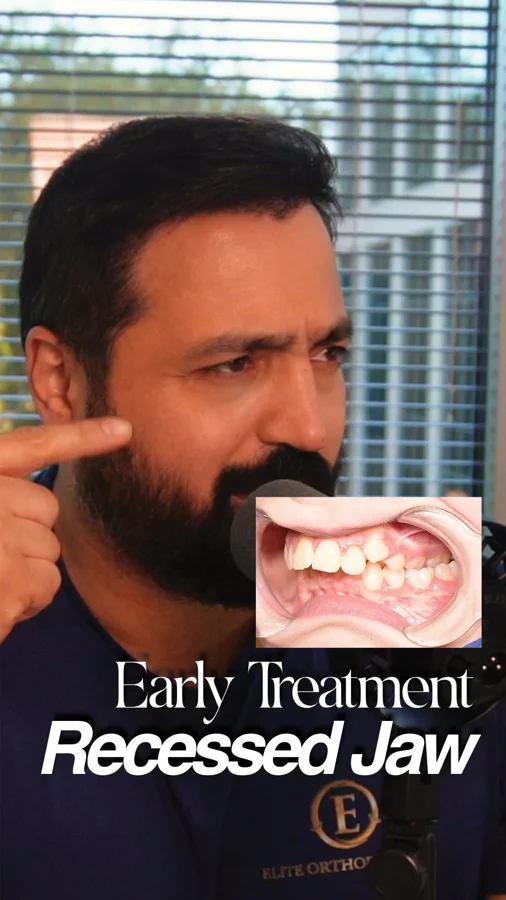
The post encourages evaluation around ages seven to eight, before all permanent teeth have arrived. The point of that visit is to understand development while there may be relevant choices to discuss. It creates an opportunity to identify a problem, describe its significance, and decide whether action or continued observation is appropriate.
This is consistent with the AAO’s recommendation for an orthodontic check by age seven. The recommendation concerns assessment, not automatic treatment. A useful consultation explains what the clinician sees now and why the proposed timing fits the child’s particular findings.
Avoid promising an adult outcome in advance
Earlier recognition may change the choices available to a growing patient. It does not let anyone promise that a child will never need surgery, never develop sleep apnea, or never need later orthodontics. Growth and future care needs vary, and a treatment plan should make its immediate objectives clear.
Ask which concern the team is trying to address during growth and what would happen if it were monitored instead. The answer should describe the specific problem and expected tradeoffs. Broad statements about preventing every future airway issue are less useful than a defined clinical goal.
Keep adult options individualized
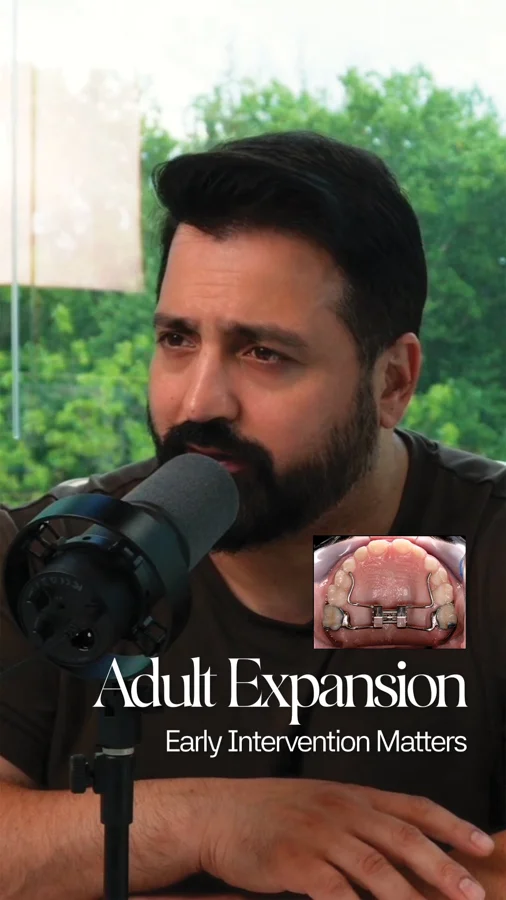
Adults should not interpret the message about early care as meaning they have missed every opportunity. The supplemental research library includes adult MARPE and DOME studies, which investigate different approaches in selected patients. Those studies support a discussion of options rather than a universal recommendation.
One adult suture-maturity study also illustrates why a fixed birthday is an imperfect guide to skeletal maturity. Assessment may need to consider the jaw deficiency, supporting tissues, treatment objectives, and the balance of nonsurgical and surgical approaches. The treating team should explain how those considerations apply to the individual.
Ask for the decision process
For a child, ask how the team will follow growth and decide whether the timing needs to change. For an adult, ask what findings support the proposed method and which alternatives were considered. In either case, understand what treatment is intended to accomplish and how success will be assessed.
The airway evaluation can organize breathing, sleep, and development concerns before consultation. From there, a coordinated assessment connects the history with clinical findings. That process gives timing a clear purpose: matching an appropriate intervention or monitoring plan to the person, rather than treating an age range alone.
Timing affects the treatment context, but does not create a universal cutoff
Growth stage influences the assessment of a transverse discrepancy, yet chronological age is only one part of the clinical context. Dentition, skeletal morphology, the degree of constriction, and periodontal considerations all affect what can reasonably be achieved. Early evaluation can identify a developing problem, while adult evaluation asks how a mature craniofacial structure may be treated safely.
The relevant comparison is therefore not simply “children can expand and adults cannot.” It is how the diagnosis and available approaches differ between patients. Adult suture-assessment research and MARPE studies support a more individualized discussion than a rigid birthday rule. Equally, the existence of adult treatment options does not mean that every later presentation can be managed by the same appliance or with the same burden as an appropriately selected childhood intervention.
Explain the additional planning questions in an adult consultation
An adult consultation should identify whether the desired change is skeletal or dentoalveolar and how the chosen method is expected to produce it. If skeletal anchorage or a surgical component is being considered, those features require their own discussion of candidacy, alternatives, recovery, and follow-up. The patient should also understand how expansion relates to subsequent alignment and retention.
Airway-related goals need to be stated separately. Adult expansion studies have investigated selected patients, including those with documented OSA and specific maxillary findings; they do not establish that age alone predicts respiratory benefit. A clinical plan should therefore record the baseline respiratory problem and identify how it will be reassessed. This preserves the useful message that evaluation can matter at different ages while avoiding an implication that all expansion methods, outcomes, or treatment experiences are equivalent.
Bring the conversation to your visit.
- What makes this the right time to act or monitor?
- What are the alternatives for my current stage of development?
- Which outcomes are realistic, and how will you assess them?
Supporting studies & resources
These resources add clinical context to the original post. Each publication should be read with its study population, methods, and outcomes in mind.
- What Are the Benefits of Early Orthodontic Treatment? American Association of Orthodontists · 2026 · Patient education
- Cone beam computed tomography evaluation of midpalatal suture maturation in adults Angelieri et al. · International Journal of Oral and Maxillofacial Surgery · 2017 · Cross-sectional imaging study
- Mini-implant assisted rapid palatal expansion (MARPE) effects on adult obstructive sleep apnea (OSA) and quality of life: a multi-center prospective controlled trial Brunetto et al. · Progress in Orthodontics · 2022 · Prospective nonrandomized controlled trial
- Distraction Osteogenesis Maxillary Expansion (DOME) for adult obstructive sleep apnea patients with narrow maxilla and nasal floor Yoon et al. · Sleep Medicine · 2020 · Retrospective cohort study